

Spinner Rings
Spinner rings, often called fidget rings, use a layered construction that allows one section of the band to rotate around another. A moving outer band sits between two fixed edges and turns around the inner band worn against the finger. Tungsten is used for the main body of these designs because the material suits wider multi-part rings.
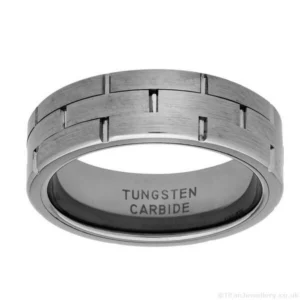
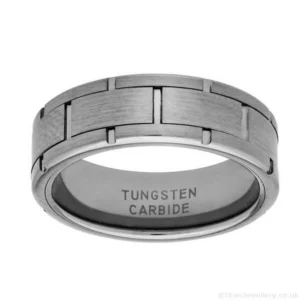
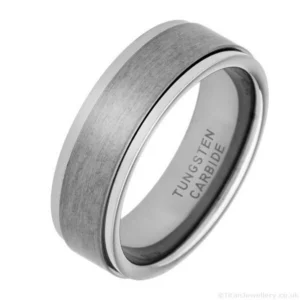
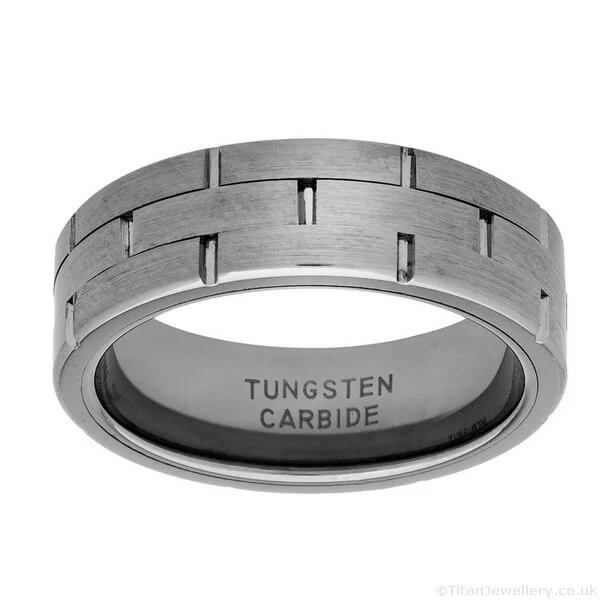
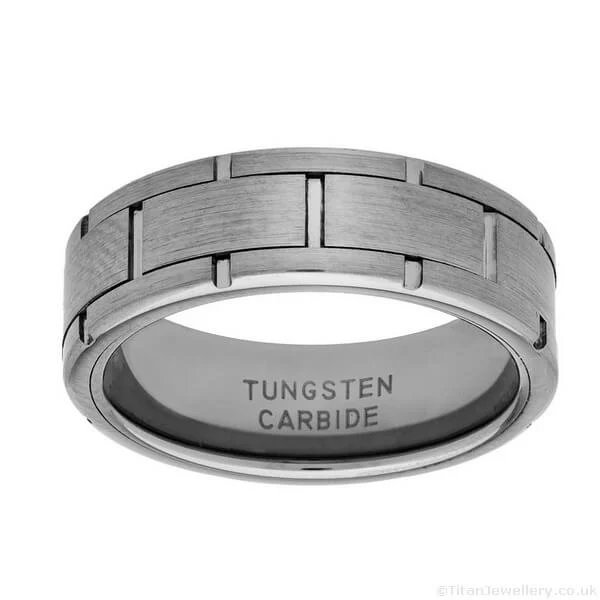
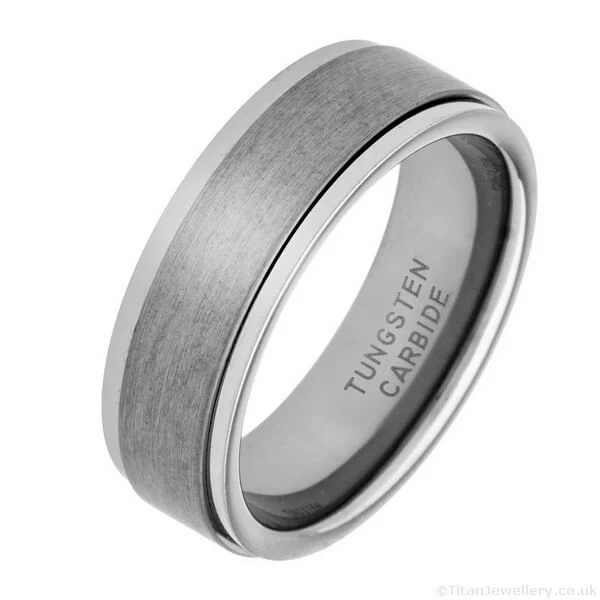
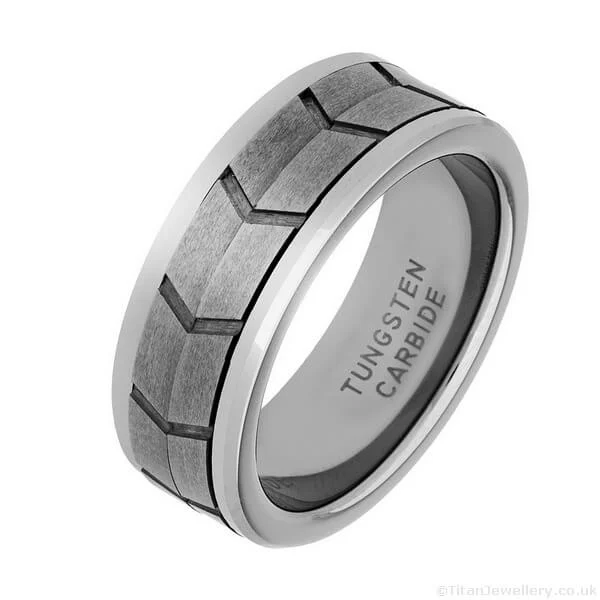
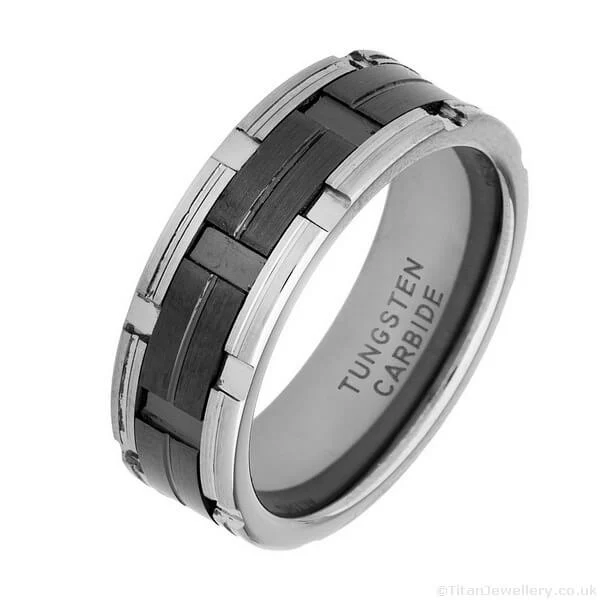
Band widths include 7.5mm and 8mm, proportions commonly chosen for men’s rings. Surface finishes vary between patterned brick detailing and a brushed centre band that contrasts with polished outer edges. One design also incorporates a zirconia ceramic element within the rotating section, introducing a darker material within the band.
Showing all 5 results
-
Tungsten Rings, 7mm Wide Rings, 8mm Wide Rings, Big Men's Wedding Rings in UK Finger Size Z (Zulu), Brushed Tungsten Rings, Extra Large Wedding Rings in UK Finger Size Z+3, Large Men's Wedding Rings in UK Finger Size X (X-ray), Large Men's Wedding Rings in UK Finger Size Z+1, Large Men's Wedding Rings in UK Finger Size Z+6, Men's Wedding Bands in UK Finger Size U (Uniform), Men's Wedding Bands in UK Finger Size Y (Yankee), Men's Wedding Bands in UK Finger Size Z+2, Men's Wedding Rings in UK Finger Size T (Tango), Men's Wedding Rings in UK Finger Size V (Victor), Oversized Wedding Bands in UK Finger Size Z+5, Spinner Rings, Unisex Wedding Bands in UK Finger Size S (Sierra), Unusual Wedding Rings for Men, Wedding Bands for Men in UK Finger Size W (Whiskey), Wedding Bands in UK Finger Size Q (Quebec), Wedding Rings in UK Finger Size P (Papa), Wedding Rings in UK Finger Size R (Romeo), XXL Men's Wedding Rings in UK Finger Size Z+4
View This product has multiple variants. The options may be chosen on the product pageUK Sizes P to Z+6In Stock£88.00 -
Tungsten Rings, 7mm Wide Rings, 8mm Wide Rings, Big Men's Wedding Rings in UK Finger Size Z (Zulu), Brushed Tungsten Rings, Extra Large Wedding Rings in UK Finger Size Z+3, Large Men's Wedding Rings in UK Finger Size X (X-ray), Large Men's Wedding Rings in UK Finger Size Z+1, Large Men's Wedding Rings in UK Finger Size Z+6, Men's Wedding Bands in UK Finger Size U (Uniform), Men's Wedding Bands in UK Finger Size Y (Yankee), Men's Wedding Bands in UK Finger Size Z+2, Men's Wedding Rings in UK Finger Size T (Tango), Men's Wedding Rings in UK Finger Size V (Victor), Oversized Wedding Bands in UK Finger Size Z+5, Spinner Rings, Unisex Wedding Bands in UK Finger Size S (Sierra), Unusual Wedding Rings for Men, Wedding Bands for Men in UK Finger Size W (Whiskey), Wedding Bands in UK Finger Size Q (Quebec), Wedding Rings in UK Finger Size P (Papa), Wedding Rings in UK Finger Size R (Romeo), XXL Men's Wedding Rings in UK Finger Size Z+4
View This product has multiple variants. The options may be chosen on the product pageUK Sizes P to Z+6In Stock£88.00 -
Tungsten Rings, 8mm Wide Rings, Big Men's Wedding Rings in UK Finger Size Z (Zulu), Brushed Tungsten Rings, Extra Large Wedding Rings in UK Finger Size Z+3, Large Men's Wedding Rings in UK Finger Size X (X-ray), Large Men's Wedding Rings in UK Finger Size Z+1, Large Men's Wedding Rings in UK Finger Size Z+6, Men's Wedding Bands in UK Finger Size U (Uniform), Men's Wedding Bands in UK Finger Size Y (Yankee), Men's Wedding Bands in UK Finger Size Z+2, Men's Wedding Rings in UK Finger Size T (Tango), Men's Wedding Rings in UK Finger Size V (Victor), Oversized Wedding Bands in UK Finger Size Z+5, Spinner Rings, Unisex Wedding Bands in UK Finger Size S (Sierra), Unusual Wedding Rings for Men, Wedding Bands for Men in UK Finger Size W (Whiskey), Wedding Bands in UK Finger Size Q (Quebec), Wedding Rings in UK Finger Size P (Papa), Wedding Rings in UK Finger Size R (Romeo), XXL Men's Wedding Rings in UK Finger Size Z+4
View This product has multiple variants. The options may be chosen on the product pageUK Sizes P to Z+6In Stock£88.00 -
Tungsten Rings, 8mm Wide Rings, Brushed Tungsten Rings, Men's Wedding Rings in UK Finger Size T (Tango), Spinner Rings, Unusual Wedding Rings for Men
View This product has multiple variants. The options may be chosen on the product pageUK Sizes Size T OnlyIn Stock£88.00 -
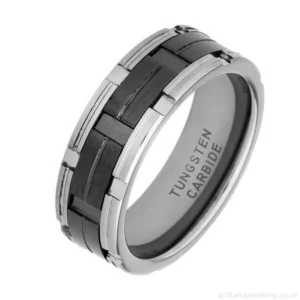
Tungsten Rings, 8mm Wide Rings, Big Men's Wedding Rings in UK Finger Size Z (Zulu), Black Rings, Black Wedding Rings, Extra Large Wedding Rings in UK Finger Size Z+3, Large Men's Wedding Rings in UK Finger Size X (X-ray), Large Men's Wedding Rings in UK Finger Size Z+1, Men's Wedding Bands in UK Finger Size U (Uniform), Men's Wedding Bands in UK Finger Size Y (Yankee), Men's Wedding Bands in UK Finger Size Z+2, Men's Wedding Rings in UK Finger Size T (Tango), Men's Wedding Rings in UK Finger Size V (Victor), Polished Black Ceramic Rings, Polished Tungsten Rings, Spinner Rings, Unisex Wedding Bands in UK Finger Size S (Sierra), Unusual Wedding Rings for Men, Wedding Bands for Men in UK Finger Size W (Whiskey), Wedding Bands in UK Finger Size Q (Quebec), Wedding Rings in UK Finger Size P (Papa), Wedding Rings in UK Finger Size R (Romeo), XXL Men's Wedding Rings in UK Finger Size Z+4, Zirconia Ceramic Rings
View This product has multiple variants. The options may be chosen on the product pageUK Sizes P to Z+4In Stock£88.00
Showing all 5 results
About tungsten fidget rings
How these rings work
The construction uses several parts combined into a single band. An inner band rests against the finger while a separate outer section turns around it.
During assembly, the moving element slides over the inner band before the outer edges are secured to retain it. Because the inner band remains stationary, the outer section can be turned with the fingers while the ring stays in place on the hand. Many people refer to these designs as fidget rings because the rotating band can be moved repeatedly.
Tungsten as a ring material
Tungsten carbide is frequently used for wider bands because the material forms precise edges that help contain the moving section between the outer rims. This allows the rotating element to sit neatly within the band without protruding beyond the ring’s edges.
A detailed explanation of what to expect from tungsten carbide rings is covered in the Tungsten Buyers Guide.
Designs and features
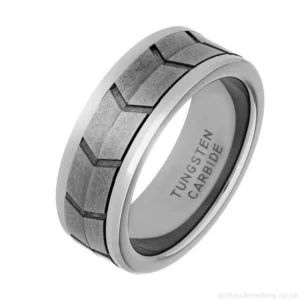
Patterned surfaces can change how the rotating band feels when it moves beneath the fingers. The brick pattern uses a repeating raised block design that gives the outer band a textured surface as it turns.
In brushed centre designs, the difference between the brushed band and polished edges creates a subtle contrast when the ring is handled. One design uses a zirconia ceramic rotating element, a material covered in more detail in our Zirconia Ceramic Rings guide.
Width and sizing
These rings come in 7.5mm and 8mm band widths. Rings of this width typically fall within the men’s size range.
UK finger sizes generally run from P to Z+6 depending on the design. Because band width influences how a ring sits on the finger, sizing guidance can be found in the Ring Width Guide.
For other styles in the same metal, see Tungsten Rings and Blended Court Rings.
Frequently asked questions
Common questions about tungsten carbide, including everyday wear, nickel binders and how the material compares to other metals, are answered in our Tungsten Carbide FAQ.