What sterling silver actually is
All of our rings in this range are made from sterling silver, hallmarked 925. That means 92.5% pure silver with a small percentage of copper added for strength.
Pure silver is too soft for a ring you plan to wear daily. It bends too easily.
By alloying it to 925 standard, the metal keeps its bright white tone but gains the structure needed for long-term wear. That balance is why sterling silver has been used for generations in fine jewellery.
A sterling silver wedding band is also generally suitable for most people with metal sensitivities and complies with EU nickel regulations. It’s one of the most established jewellery alloys in use, and it works equally well as a men’s silver wedding ring or a women’s silver wedding ring.
How silver behaves in real life
Most people don’t think about how a ring will look after six months. They think about how it looks in the box.
Silver has a soft white appearance, somewhere between the warmth of gold and the denser grey tone of platinum. It’s neutral, easy to wear, and doesn’t compete with other jewellery.
It will show surface wear. All precious metals do. We often explain it simply: silver tells the story of being worn. Fine marks build up with everyday wear. Some people like to keep their silver wedding band highly polished. Others prefer the slightly mellowed finish that develops naturally.
That said, it’s worth knowing that silver won’t stay “shop perfect” for long. It starts to take on its own character quite quickly. For many couples, that’s part of the appeal. It begins to look like their ring rather than a display sample.
Does sterling silver tarnish? It can oxidise naturally, which may cause faint dulling or darkening in certain areas. This is a surface reaction. It doesn’t weaken the ring, and it can be polished back if you prefer a brighter finish.
People sometimes ask whether silver wedding rings are good compared to other metals. Compared to gold, silver has a cooler tone and a more understated look. Compared to platinum, it is lighter on the hand and more accessible in price. The right choice usually comes down to colour preference, weight and budget rather than one being universally better.
How it’s made
Here’s the part most people don’t expect to matter, but it does.
All of our sterling silver wedding rings are CNC machined from solid metal rather than cast. In practical terms, the ring is cut from solid sterling silver. It isn’t poured into a mould. The metal starts solid and remains solid throughout the process, which gives a consistent, reliable structure for daily wear.
When we explain this in person, most customers assume all rings are made the same way. They aren’t. Once people understand the difference between something cut from solid metal and something cast, the conversation usually changes.
Machining also allows precise control over weight. Every silver wedding band of the same width and profile weighs the same regardless of finger size. A size P and a size Z cost the same. You are choosing a specification, not paying more because your hands are larger.
After machining, each ring is hand finished and polished in our UK workshop. Every ring is hallmarked under UK law through the Birmingham Assay Office, or occasionally the London Assay Office, with the 925 sterling silver hallmark to confirming purity.
All silver used is 100% recycled precious metal. Recycled silver is chemically identical to newly mined silver. The difference is simply the source.
If you’d like the engineering detail behind this, including why we machine rather than cast, our full technical guide to silver wedding rings goes into that depth.
Profile is about shape and comfort
Choosing a profile is really about how you want the ring to feel when you forget you’re wearing it.
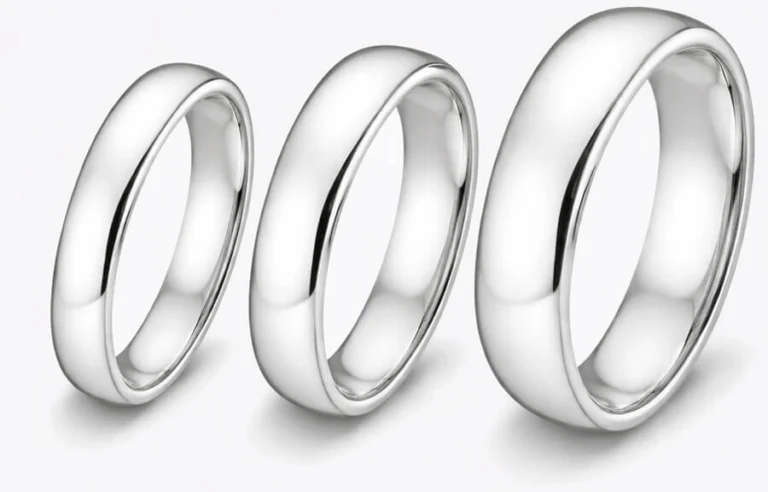
Court profile is rounded on the outside and gently rounded on the inside. A silver court wedding ring is still the most popular option. If someone walks in unsure what to choose, this is usually where we start. It’s comfortable, forgiving, and works well across narrow and wider widths.
D-Shape has a rounded outer surface and a flat interior. It looks traditional from above but sits flatter against the finger. We often see D-Shape chosen in medium widths by people who like a classic outline but prefer a more definite feel against the skin.
Easy Fit, sometimes called flat court, has a flat outer surface and a rounded inner surface. It gives a cleaner, more modern outline with internal comfort. In our experience, this is a common choice for people who have never worn a ring before and are slightly anxious about comfort. The rounded inside makes that adjustment period easier.
Flat profile is flat inside and out with crisp edges. A silver flat wedding ring has a contemporary feel. We often see this chosen in medium to wider widths where that clean edge really shows.
For more on ring profiles, see our ring profile guide that has more information.
Choosing a width
Width is the decision most people overthink.
Widths are available from 2mm to 12mm in UK sizes I to Z, though not every combination of width, size, and profile is available across the full range.
2mm or 3mm is light and subtle. It suits smaller hands or anyone who prefers something discreet.
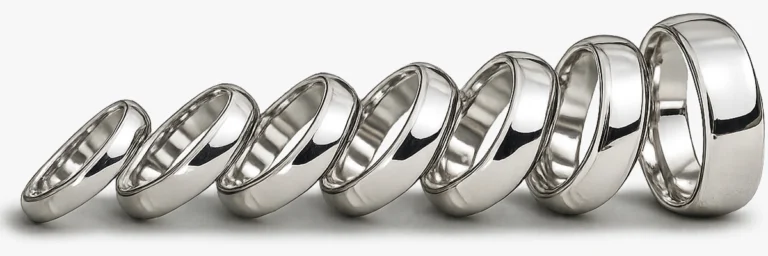
4mm to 6mm is where most people settle. Over the years, 5mm and 6mm have consistently been the most common choices for both a silver wedding band for him and a silver wedding band for her. They feel balanced. Present, but not heavy.
7mm and above starts to feel more substantial. An 8mm ring has presence. It’s not discreet. We occasionally have someone try on 8mm after wearing nothing on that finger for years, and the first reaction is usually silence. Then a nod.
For couples choosing matching silver wedding rings, we often see one partner choose 4mm or 5mm and the other 6mm or 7mm in the same profile. The proportions differ, but the overall look stays aligned.
Width affects how a ring fits. Our ring width guide includes a tool that adjusts your size based on the width you choose.
Rings over 8mm wide require more machining time, so they may have slightly longer lead times. Most sterling silver wedding bands are produced within 5 to 7 working days. Any variation is made clear before ordering. Every ring is made to order to your chosen size, width and profile.