Manufacturing Method: Why Machining Matters
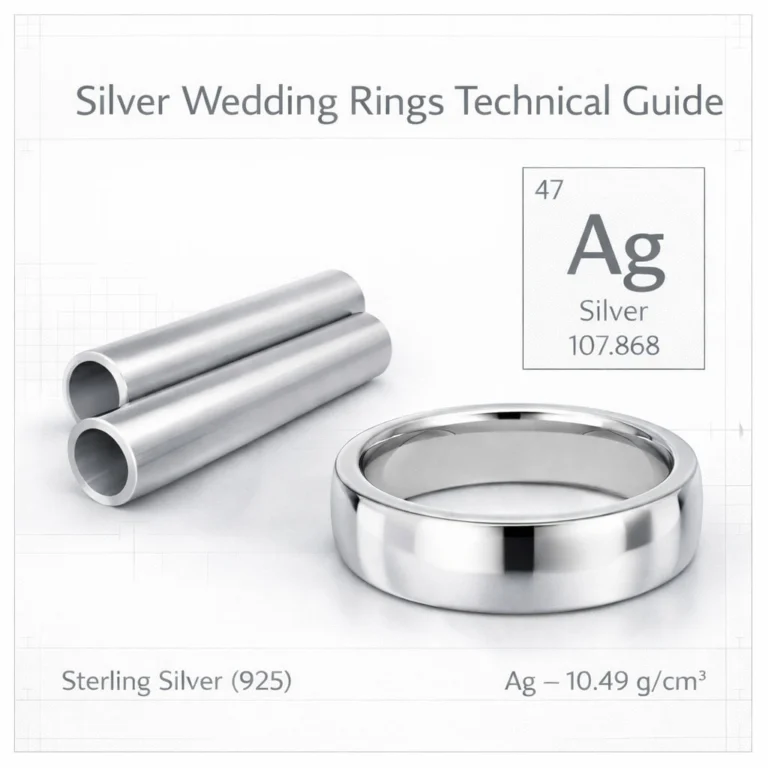
All silver wedding rings in this range are CNC lathe-turned from solid tube stock. They are not cast.
This manufacturing choice has direct implications for strength, consistency, and long-term reliability.
Cast rings and porosity
Cast rings are produced by pouring molten metal into a mould. During cooling, microscopic air pockets can become trapped within the metal. This internal structure is known as porosity. A useful comparison is the internal bubbles found in an Aero chocolate bar.
Over time, the thin walls between these pockets can act as stress points. With daily wear, this can increase the risk of cracking or failure years after manufacture. Porosity is a known limitation of casting and cannot be fully eliminated.
CNC-machined rings
Machined wedding rings are cut from sterling silver tube. Because the metal is already solid, there are no internal voids. This avoids the porosity-related manufacturing weakness found in cast rings.
To date, we have not experienced any structural failures in machined wedding rings related to porosity.
CNC machining also refines the metal structure during cutting, producing a denser and more consistent ring. This is why machined silver wedding rings are recommended over cast alternatives, particularly for rings intended for long-term daily wear.
Consistent Weight Across All Sizes
A defining technical feature of these silver wedding rings is weight consistency across all finger sizes.
In many wedding ring ranges, a larger size weighs more and costs more because additional metal is required. With this range, every ring of the same specification weighs exactly the same, regardless of size.
This is achieved by adjusting the depth of the ring during machining while maintaining the same external width and profile.
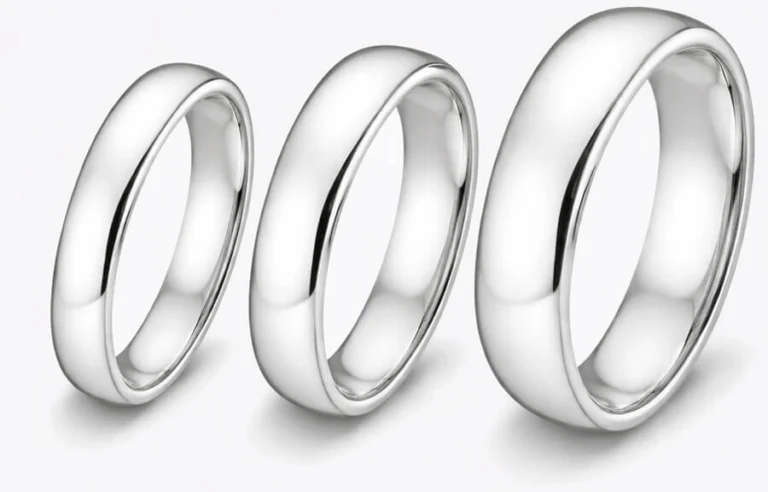
Example using a 6mm Court profile
Both rings weigh the same. The difference in circumference is compensated for by a precise adjustment in wall thickness. This level of control is only possible through CNC machining.
This means straightforward pricing. The same specification costs the same regardless of finger size.
Ring Profiles Available
Silver wedding rings are available in four profiles. Each profile affects how the ring looks and how it feels on the finger.
Available profiles include Court profile, D-Shape profile, Easy Fit profile, and Flat profile.
Court profile
The Court profile is the most traditional option and the most commonly chosen. It has a rounded outer surface and a gently rounded inner surface. As the ring becomes wider, the internal curvature becomes less pronounced, as the same curve spans a larger area.
This profile is frequently selected as a silver wedding band for men, as a silver wedding band for him, and equally as a silver wedding band for women who want a classic wedding ring shape with a comfortable fit.
D-Shape profile
The D-Shape profile features a rounded exterior with a flat interior. It presents a traditional appearance from the outside while offering a defined, flat contact surface on the finger.
Easy Fit profile
Also known as flat court, the Easy Fit profile has a flat outer surface and a rounded inner surface. This profile is often chosen by those who prefer a modern look combined with internal comfort.
Flat profile
The Flat profile is flat on both the inside and outside. It produces a clean, contemporary appearance with crisp edges and a uniform surface. This profile is commonly selected as a silver wedding band for women who prefer a minimal, modern style.
Sizes and Widths
Silver wedding rings are available across the range in UK finger sizes I to Z.
Widths range from 2mm to 12mm. Wider rings require additional machining time and may take longer to manufacture. Rings wider than 8mm typically require additional manufacturing time due to increased material removal and finishing requirements. Any extended lead times are clearly stated at the point of purchase.
All rings are made to order to the selected size, width, and profile.
Recycled Precious Metals
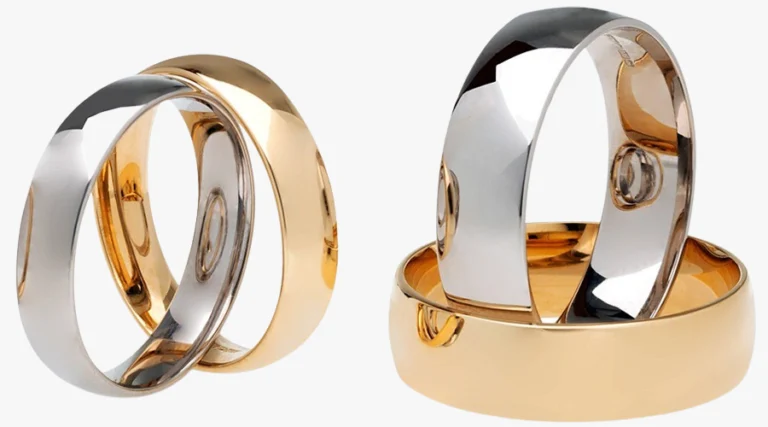
All silver and gold wedding rings are produced using 100% recycled precious metals.
Recycled silver and gold are metallurgically identical to newly mined metal. They offer the same strength, appearance, and longevity while eliminating the environmental impact of extraction and refining.
Platinum is the exception. At present, recycled platinum is not available within this supply chain, and platinum wedding rings are produced using newly mined platinum.
Ring blanks are sourced from a major European bullion dealer. After machining, all rings are hand-finished and polished in our own workshop. Every ring is manufactured in the UK.
Hallmarking and Compliance
All silver wedding rings are hallmarked in accordance with UK hallmarking law.
Hallmarking is carried out during manufacture and confirms both metal purity and legal compliance. Sterling silver rings carry the Silver 925 hallmark. This provides legal assurance of metal purity and protects against misrepresentation.
Most rings are hallmarked through the Birmingham Assay Office, with occasional use of the London Assay Office depending on production scheduling.
Lead Times
Most silver wedding rings are manufactured within 5 to 7 working days.
Some wider specifications may require additional time. Any variation in lead time is clearly communicated before ordering.
All rings are made to order.