

Superconductor Rings
A superconductor ring is cut from decommissioned scientific conductor rod originally used in equipment such as MRI scanners and particle accelerators. Inside that rod are hundreds of niobium-titanium alloy filaments embedded in copper. When the rod is cut and the surface is finished, the cross-section of those filaments becomes visible.
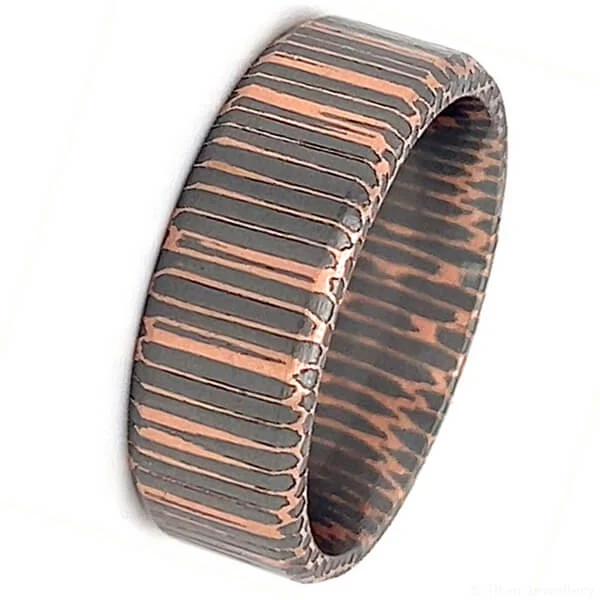
That internal structure is what creates the pattern across the ring. Silvery grey alloy lines run through warm copper tones, revealed rather than applied. Because the arrangement of the filaments changes along the length of the rod, every ring exposes a different slice of that structure. The result is a band where no two examples share the same pattern, even when cut from the same source material.
Showing the single result
-
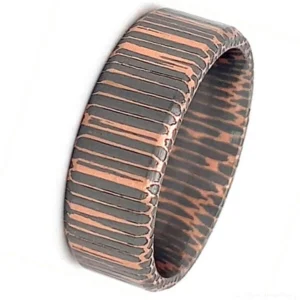 View This product has multiple variants. The options may be chosen on the product pageUK Sizes P to ZIn Stock£395.00
Showing the single result
Superconductor ring details
The material
Because the arrangement of niobium-titanium filaments shifts along the length of the conductor rod, each ring exposes a different cross-section when it is cut. Some show dense clusters of silvery alloy lines running through the copper, while others reveal broader copper areas with scattered filaments. Even rings cut from the same rod will not share the exact same visual pattern.
The brushed finish softens reflections and helps the contrast between the copper and the grey alloy remain visible from different angles. Within the composite, the niobium-titanium alloy is generally hypoallergenic, although a small number of people may be sensitive to copper. This design also sits within our wider titanium rings range because of the niobium-titanium alloy present in the material.
Sizing and fit
At 8mm wide and around 2.3mm deep, the ring has a flat exterior with a comfort fit interior that curves smoothly against the finger. Because wider rings occupy more space across the finger, they usually feel tighter than narrower bands of the same size. This ring cannot be resized, so selecting the correct size before ordering matters. For guidance on how width affects fit, see the ring width sizing guide. Sizes run from UK P to Z.
Copper and patina
When new, the exposed copper is sealed with a protective resin to slow early discolouration. Over time the copper will develop a darker patina as it reacts naturally with air and skin contact. That gradual change is expected and is part of how copper behaves within this composite material.
Buyers interested in unusual materials often also explore our unusual wedding rings for men, which covers alternative metals and uncommon designs.
Helpful guides
For those who want to understand more about how superconductor material behaves in jewellery use, our superconductor rings information guide covers the practical details of ownership including patina, sizing and skin sensitivity.
A more detailed look at the science behind the material and how the conductor rod is structured is available in the superconductor rings technical reference.