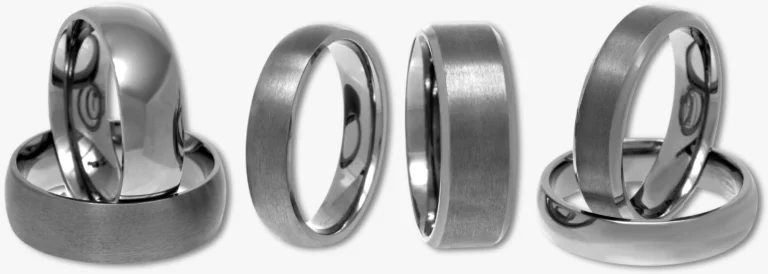
Choosing a wedding ring is easier when you understand what it is like to live with the metal day to day. Most people looking at tantalum wedding rings have already handled titanium or other alternative metals and want something with a different feel. Tantalum stands out straight away once you pick one up, but it also comes with its own set of trade-offs.
What to expect from tantalum wedding rings
The first thing most people notice with tantalum wedding rings is the weight. Pick up a tantalum ring and it feels solid in a way that lighter metals do not. Compared to titanium, the difference is obvious in the hand. The weight sits closer to a gold band, so it has a sense of heft that some people prefer straight away.
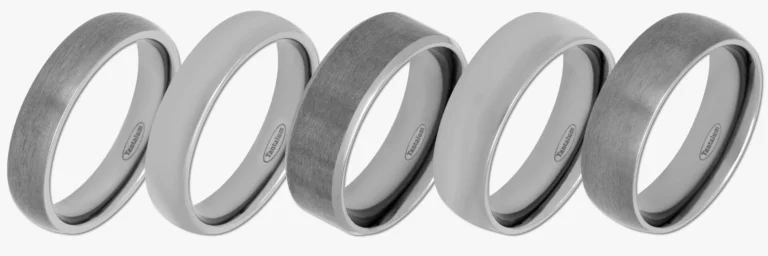
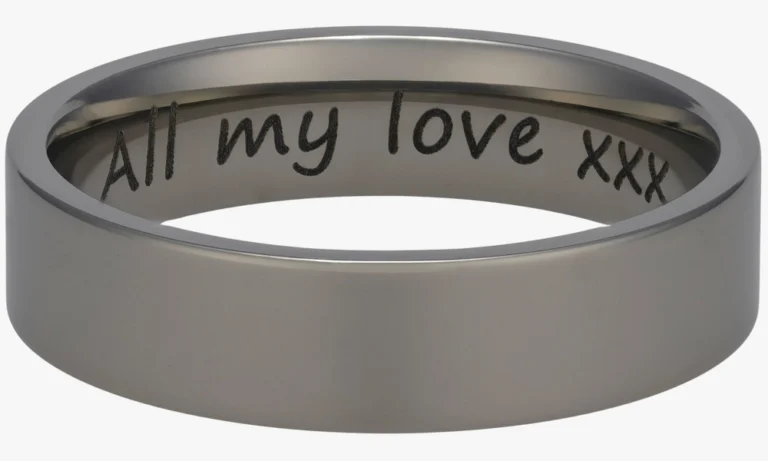
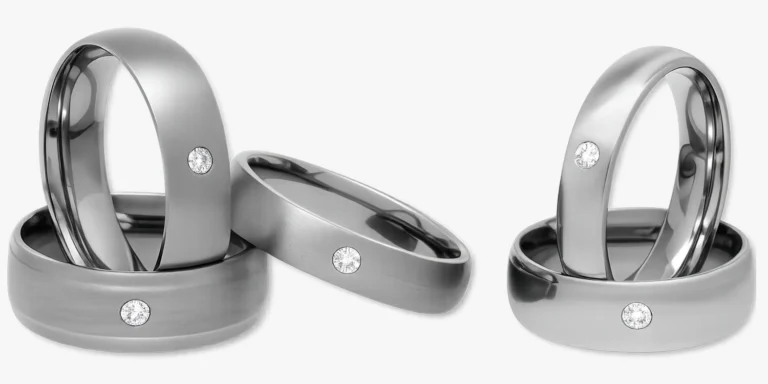
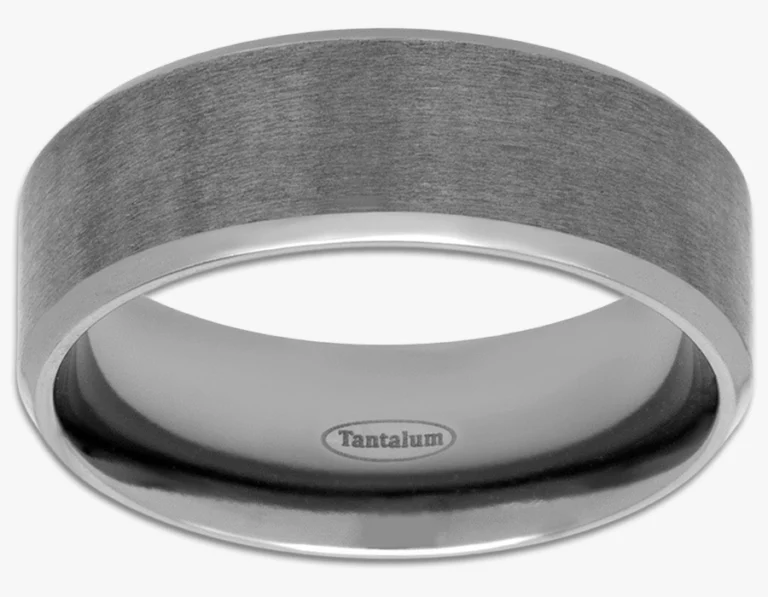
Colour is the next thing that tends to stand out. Tantalum wedding rings have a gunmetal grey tone with a subtle blue-grey tint. They are darker than titanium and noticeably darker than platinum. They do not have the bright white look of precious metals, and they do not shift in colour over time because there is no surface layer or plating. The colour runs all the way through the ring. This is 99.9% pure tantalum, not alloyed with any other metals, so there is nothing to wear through or change over time.
Once worn, the weight becomes part of the experience. Some people are immediately comfortable with it. Others notice it for the first week or so, then adjust to the point where it feels normal, and it feels strange when you take it off.
Tantalum ring durability
Tantalum ring durability is one of the main reasons people start looking at tantalum wedding rings, but hardness on its own does not tell you how a ring actually holds up. Tantalum sits at around 6.5 on the Mohs scale, so it is harder than titanium and harder than gold or platinum, but not as hard as tungsten or cobalt.
How it behaves under impact matters just as much. Tantalum metal is tough and ductile, so it absorbs knocks rather than cracking or chipping. That is a different behaviour to brittle materials, where a hard knock can crack or shatter the ring.
The colour is solid throughout the ring, not a coating or plating. That means there is no outer layer to wear away. The surface changes with use, but the underlying colour remains consistent.
It also deals well with everyday exposure. Tantalum metal does not tarnish, corrode or discolour over time. Sweat, seawater and normal household chemicals do not affect it in the way some metals can.
Hypoallergenic and biocompatible
Tantalum is biocompatible, meaning it does not trigger a reaction when worn against the skin. It is the same type of metal used in surgical implants, which is why people who have had issues with other jewellery tend to look at tantalum rings. For anyone who has experienced irritation from other metals, tantalum wedding rings are a reliable option.
Tantalum wedding rings compared to gold and platinum
Tantalum wedding rings are rarer than gold as a raw element but cost less, which surprises most people.
In terms of weight, tantalum rings have a similar feel to 18ct yellow gold and are noticeably heavier than titanium. Colour is where they differ most clearly. Gold ranges from yellow to white depending on alloy, and platinum is bright white with a greyish tint, while tantalum sits in a darker gunmetal grey range.
Gold and platinum can usually be resized, while tantalum rings cannot. That difference matters over time. Because tantalum wedding rings sit at a lower price point, replacing a ring is a more realistic option if finger size changes.
Scratching and everyday wear
Tantalum wedding rings mark in everyday wear. They are harder than titanium, so they hold up slightly better on the surface, but they will still pick up marks over time. Every ring worn daily does the same. Our guide to why rings scratch explains this behaviour across different metals. For a broader comparison of how materials behave, see hardness and density guide.
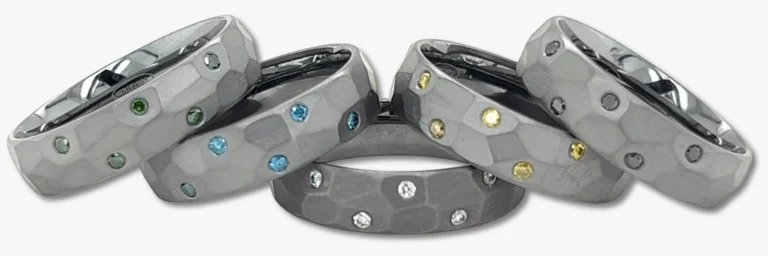
On a polished tantalum ring, marks show as fine surface lines that break up the reflection. On a brushed finish, contact points gradually show polished areas through the texture. Hammered finishes tend to disguise this more effectively because the surface is already broken up visually.
Over time, all tantalum rings settle into a worn-in patina. The ring will not look the way it did when new, but the change is gradual and becomes part of the overall appearance.
We can repolish or rebrush tantalum rings in our workshop, so refinishing is available. For customers who have purchased from us, it is best to reach out for current costs and timeframe.
A note for jewellers: the refinishing approach is similar to platinum. Work down through the abrasive grades to the finest possible finish before polishing, then use a green or orange Dialux compound.