
Tantalum Liner and Nickel Compliance
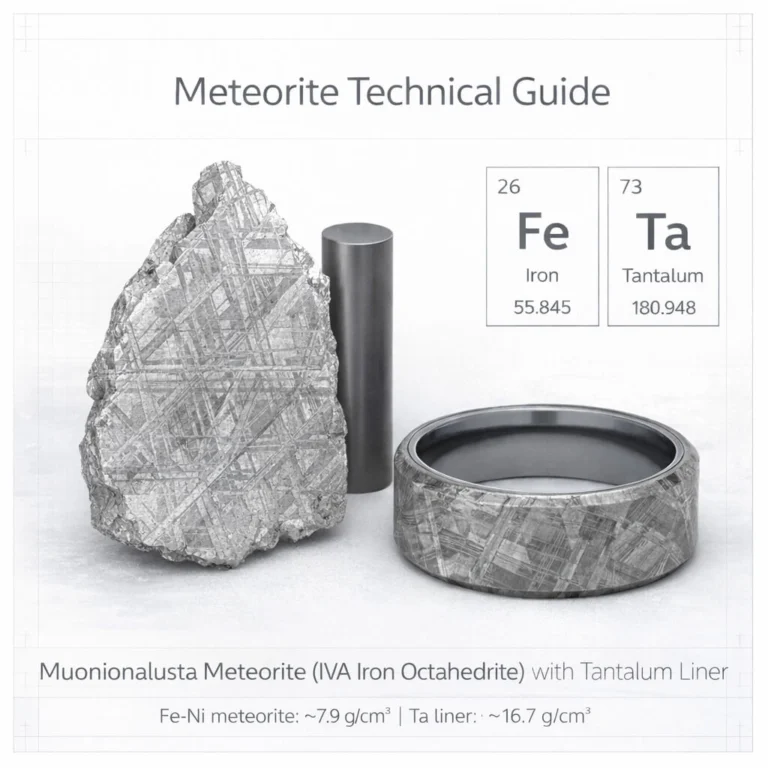
A critical consideration with meteorite rings is nickel content. Muonionalusta meteorite contains approximately 8.4 percent nickel, a level that exceeds the limits set by EU legislation for jewellery intended for prolonged skin contact.
EU REACH Regulation Requirements
EU REACH Regulation Annex XVII Entry 27 restricts nickel release from jewellery to less than 0.5 micrograms per square centimetre per week for items in prolonged contact with the skin. Due to its natural composition, Muonionalusta meteorite cannot meet this requirement without a physical barrier.
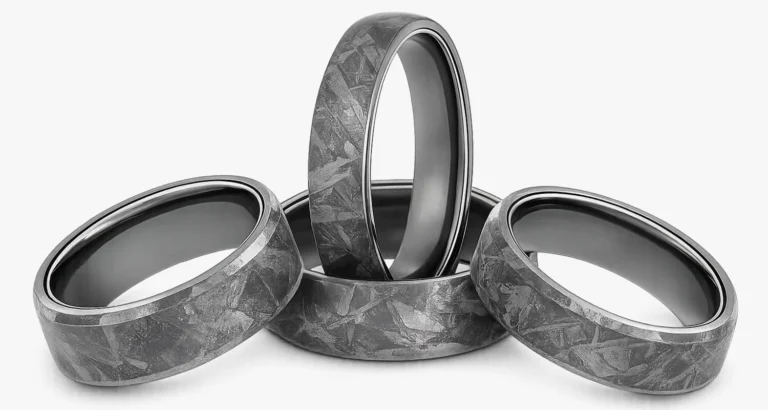
To address this, these meteorite rings are produced with a full tantalum liner. The liner prevents the wearer’s skin from coming into contact with the meteorite itself, allowing the ring to be worn comfortably and safely despite the nickel content of the outer material.
Tantalum is a rare, dense, and corrosion-resistant metal recognised for its biocompatibility. It is hypoallergenic and suitable for prolonged skin contact under EU regulations. Further information on this material can be found on the tantalum rings page.
Material Characteristics and Maintenance Reality
Meteorite is not a low-maintenance jewellery material. Its iron-nickel composition makes it susceptible to corrosion if left unprotected.
Protective Coating and Maintenance
All meteorite rings are sealed with a clear protective resin coating applied during manufacture. This coating provides initial protection and helps limit exposure to moisture and oxygen, but it is not a permanent solution. Understanding the limitations of this protective layer is essential when considering meteorite jewellery.
Over time, wear and abrasion can reduce the effectiveness of the coating. Once the coating wears, the meteorite surface will require regular attention to prevent oxidation. Light application of mineral oil or gunmetal oil can be used to protect exposed areas.
Salt water is particularly corrosive and should be avoided. Any exposure to water should be followed by thorough drying. Chemical contact should also be avoided, as aggressive substances can accelerate corrosion. Meteorite rings are therefore best suited to individuals who understand the nature of the material and are prepared to care for it accordingly. Corrosion caused by neglect is not considered a material defect.
Meteorite is not the most practical metal for jewellery from a purely functional standpoint. However, its rarity, age, and unmistakable origin make it highly valued by those who prioritise material history and uniqueness over convenience.
Who Meteorite Rings Are For
Meteorite rings tend to appeal to individuals who value story and origin over uniformity. These rings are chosen for their connection to cosmic history, their natural variation, and the knowledge that the material has survived planetary formation, impact, and glaciation.
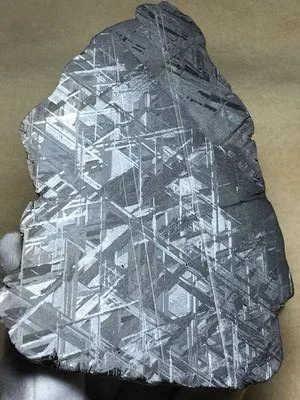
These designs are produced as meteorite rings for men, with substantial widths and solid construction. Each muonionalusta meteorite ring displays a naturally occurring Widmanstätten pattern that cannot be replicated or duplicated, making every piece inherently individual.