
What Makes These Rings Different
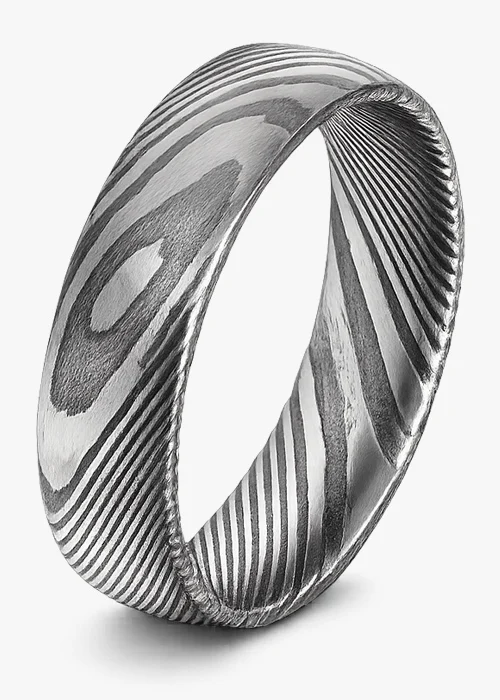
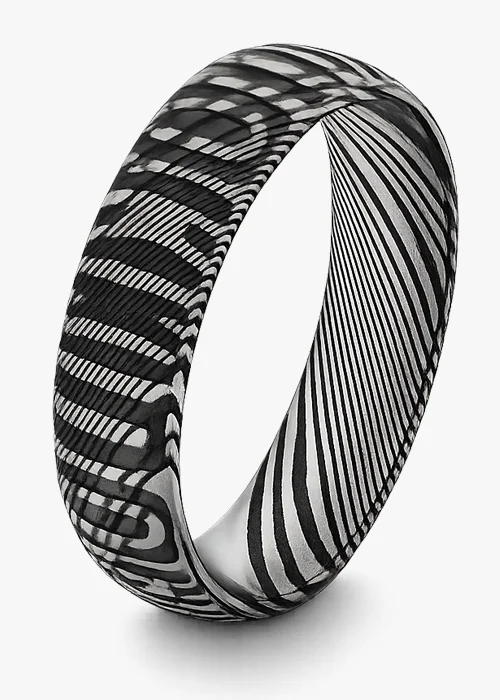
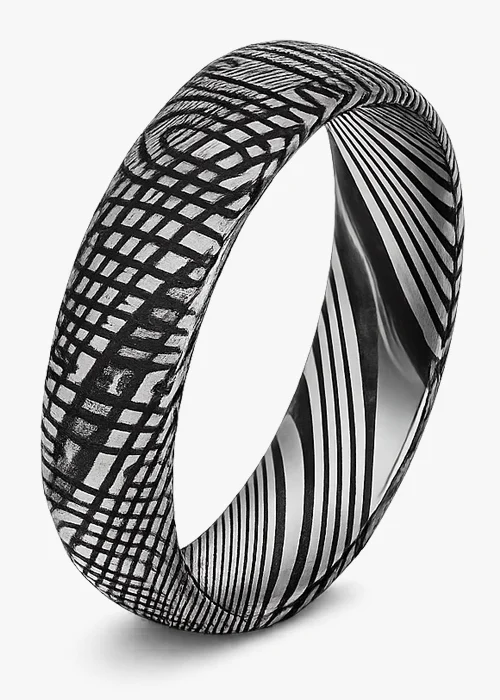
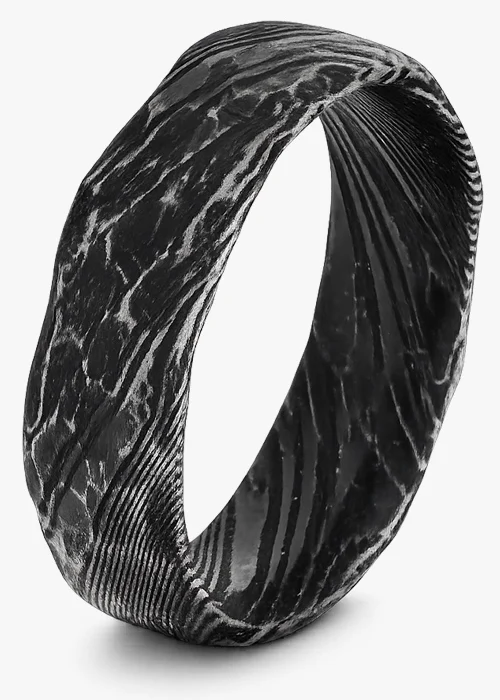
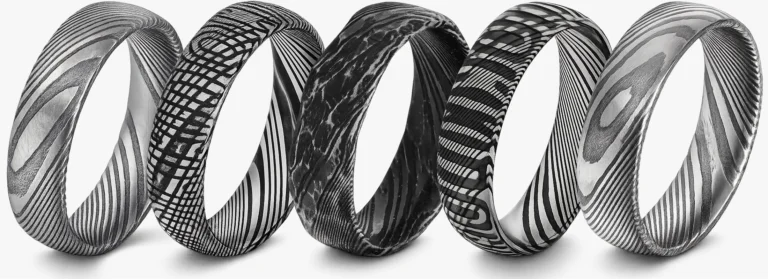
Every Damascus steel ring is structurally distinctive.
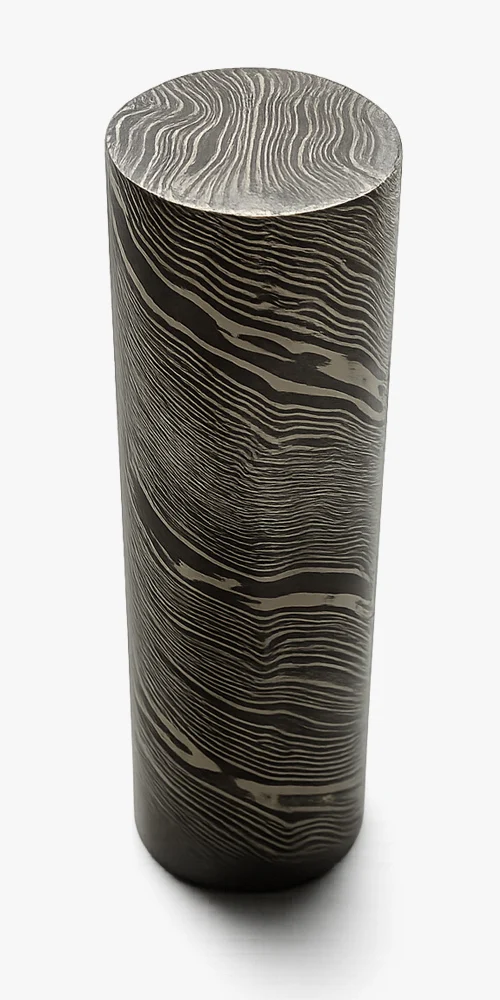
When we cut a ring blank from a billet, the visible pattern depends on where that cut falls. A size R comes from a different section of the billet than a size Z. Even two rings of the same design and size will show different sections of the underlying layered pattern.
That is not a marketing feature added at the end. It is simply how layered steel behaves when you machine through it.
For customers exploring alternative wedding rings, the appeal is often this individuality. It does not look like a standard polished band. It has depth and variation that you cannot replicate with a single-alloy metal.
There is also a tactile quality that photographs do not fully show. The etched layers create a subtle three-dimensional surface. You can feel the structure. The edges of the layers are physically present, giving the ring a slightly industrial texture. For many people that is exactly the attraction. If you are looking for perfectly smooth, mirror-flat metal, Damascus steel may not be the right choice, and one of our other metals would likely suit you better.
The weight tends to surprise people as well. Damascus steel is heavier than titanium but lighter than tungsten carbide for the same dimensions. Someone used to titanium often comments on the extra presence. Not heavy, just more substantial.