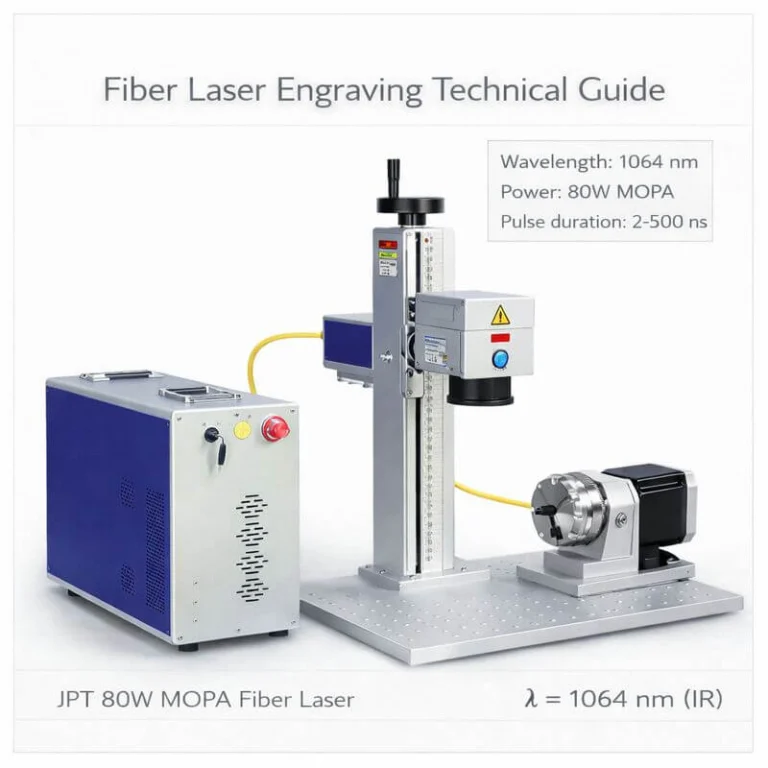
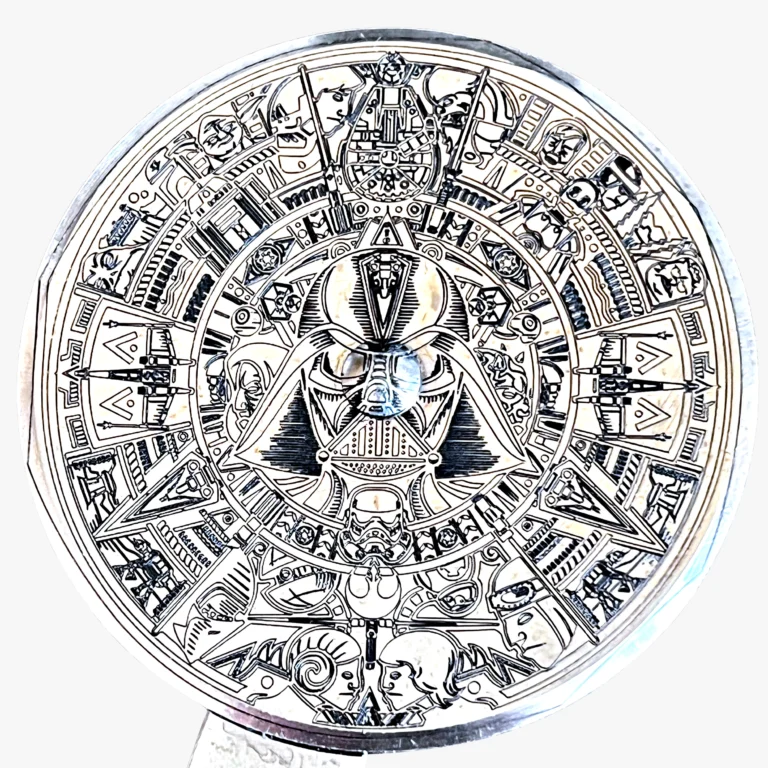
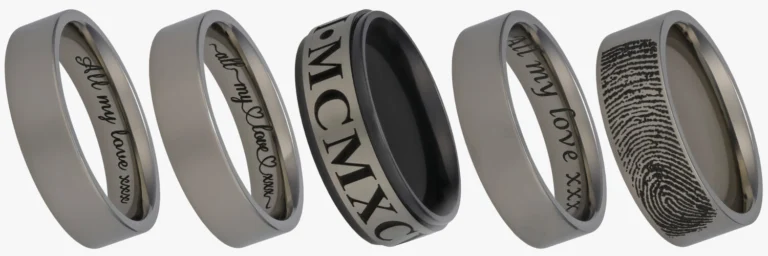
Modern MOPA fibre systems form the backbone of this approach. Unlike fixed-pulse fibre setups found on many laser engraving machine for metal platforms, a MOPA laser allows independent adjustment of pulse width and frequency while maintaining stable average power. In practice, this means the operator can control not just how much energy is delivered, but how quickly that energy is deposited into the metal. For jewellery engraving, where detail, consistency, and surface integrity matter, that distinction is fundamental.
Why Laser Engraving Metal Demands Pulse Control
When laser engraving metal, energy transfer occurs over extremely short timescales. If energy arrives faster than the metal can conduct heat away from the interaction zone, the surface reaches vaporisation temperature almost instantly. If energy arrives more slowly, heat has time to spread laterally, raising the temperature of surrounding material and promoting melting rather than direct removal.
Questions such as how does laser engraving work are best answered by examining how energy is delivered into the metal at these microscopic timescales, rather than by looking at headline power figures alone.
This difference is not subtle under magnification. Even when using the same lens, the same engraving speed, the same frequency, and the same average power, altering pulse width alone changes the shape, size, and structure of every individual laser dot.
In a workshop context, pulse width is not a cosmetic adjustment or a fine-tuning step applied at the end. It is a primary parameter that determines whether metal is cleanly removed, softened and displaced, or thermally blended into the surrounding surface. Treating pulse width as a preference setting ignores the basic physics of how laser engraving works on metallic materials.
Short Pulse Behaviour in Metal Engraving
Short pulse widths deliver energy in very brief, high-intensity bursts. Because the same pulse energy is compressed into a shorter time window, peak power rises sharply even though average power remains unchanged. Energy is deposited faster than heat can diffuse into the surrounding metal.
In practical metal engraving work, this produces results characterised by sharp boundaries and controlled material removal. Under magnification, short pulses form clean, well-defined craters with minimal surrounding disturbance. There is less evidence of molten metal flowing outward from the impact site, and redeposited material is reduced.
We have found this behaviour particularly well suited to fine lettering, detailed motifs, and deeper engraving where edge clarity matters. The engraving appears cleaner because the surrounding surface experiences less thermal exposure, reducing softening and discolouration at the edges. Material removal is dominated by vaporisation rather than melt displacement, so the engraved geometry more closely follows the intended toolpath.
Long Pulse Behaviour and Thermal Diffusion
Longer pulse widths deliver the same total energy over a longer period of time. Peak power is lower, and the metal has more opportunity to conduct heat away from the interaction zone while the pulse is still active.
The result is a greater contribution from melting. Instead of sharply defined craters, long pulses create broader interaction zones where material softens, flows, and re-solidifies. Edges appear softer, dots grow wider, and surface texture becomes smoother.
Under magnification, laser engraving on metal with long pulse strategies often shows rounded melt pools and subtle splash marks where molten metal has displaced outward before freezing. With very long pulses, surface rippling and orange-peel textures can develop as repeated thermal cycling reshapes the surface.
This behaviour is not inherently undesirable. Long pulses are useful for filled engravings, surface blending, and finishing operations where a smoother appearance is required. Certain visual effects on specific alloys rely on controlled thermal accumulation rather than aggressive material removal.
Why Dot Size Changes Even When the Optics Do Not
A common point of confusion in metal laser engraving machine discussions is the relationship between laser spot size and engraved dot size. The optical spot produced by the lens does not change when pulse width changes. The engraved dot on the metal surface does.
This behaviour is driven by the Gaussian intensity profile of the laser beam. The centre of the beam carries the highest energy density, while the edges carry progressively less. With a short pulse, only the central region reaches sufficient energy density to affect the metal before the pulse ends. The result is a small, sharply defined dot.
As pulse width increases, the lower-energy edges of the beam are given more time to heat the surrounding metal. Material at the periphery begins to melt or soften, causing the engraved dot to grow physically larger even though the optical spot remains unchanged.
This explains why two metal engraving passes run at the same speed and frequency can look entirely different when pulse width is altered. It also explains why dot overlap increases with longer pulses and why fine detail can blur even when no other settings are changed.
Pulse Width Influences More Than Colour
Pulse width is sometimes discussed primarily in the context of colour marking. While it does influence colour through thermal effects and oxide formation, this is only one consequence of a much broader set of controls within laser engraving metal processes.
Changing pulse width affects engraving depth, surface roughness, edge sharpness, dot consistency, and the balance between vaporisation and melting. It influences whether material is ejected cleanly, redeposited nearby, or redistributed as a thin molten film.
In practical terms, pulse width governs the micro-topography of the engraved surface. That micro-topography determines how light reflects, how debris accumulates, and how the engraving appears after cleaning or light finishing. These differences are immediately apparent under magnification, even when they are subtle to the naked eye.
Average Power and Peak Power Are Not Interchangeable
Laser specifications often emphasise average power because it is easy to quote and compare. An 80-watt rating suggests capability, but average power alone does not describe how energy interacts with metal during engraving.
Peak power describes how concentrated energy is within an individual pulse. It is determined by pulse energy divided by pulse duration. Two machines running at the same average power can behave very differently if their pulse widths differ, even when both are marketed as a metal laser engraving machine.
For example, a laser operating at 50 watts and 20 kilohertz delivers 2.5 millijoules of energy per pulse. Delivered over 200 nanoseconds, peak power is 12.5 kilowatts. Delivered over 50 nanoseconds, peak power rises to 50 kilowatts. The average power is unchanged, but the physical interaction with the metal is fundamentally different.
Higher peak power deposits energy faster than heat can diffuse away, favouring rapid vaporisation and sharper material removal. Lower peak power allows heat to spread, increasing melting and thermal accumulation. This distinction explains why copying settings between different laser engraving machine for metal systems often fails.