Is cobalt radioactive?
This question comes up regularly, and it is specific to cobalt.
The confusion comes from cobalt-60, a radioactive isotope produced artificially for medical and industrial use. That material does not occur naturally and is not used in jewellery.
Cobalt used in rings is stable and non-radioactive. It does not emit radiation. It does not change over time. It cannot become radioactive through wear, contact, or proximity to other materials.
Cobalt jewellery alloys are closely related in base composition to cobalt-chromium alloys used in medical implants. In both cases, the cobalt itself is stable.
There is no radiation risk associated with wearing a cobalt ring. The concern exists because isotopes are often mentioned without context.
“Alternative metal rings can’t be removed in an emergency”
This is one of the most persistent claims, and it is simply wrong.
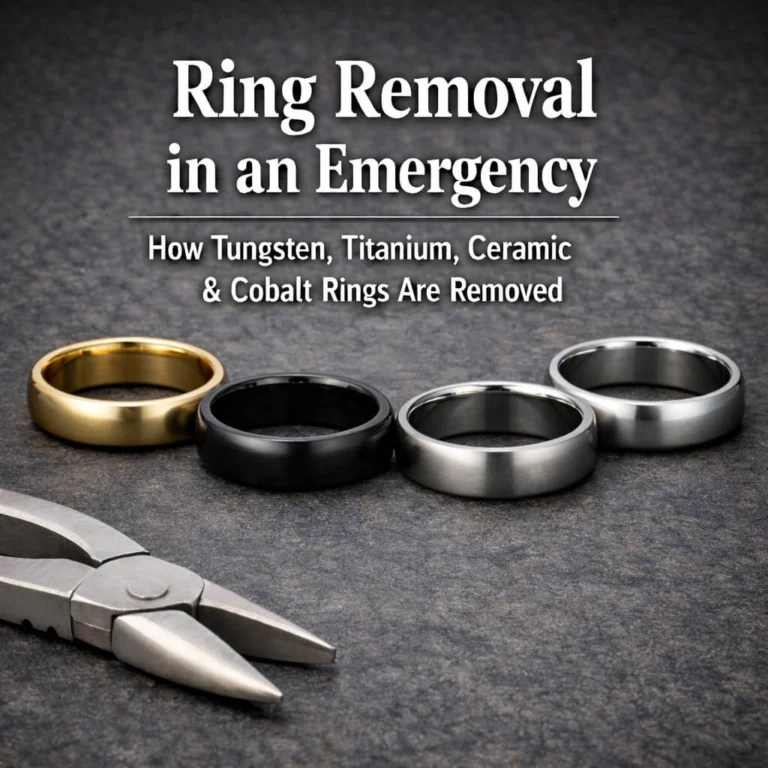
All ring materials can be removed in an emergency. What changes is the method, not the outcome.
Emergency departments and fire services remove rings of all materials as part of routine care. Soft metals such as gold and silver are usually cut. Tough metals including titanium, cobalt, tantalum, and zirconium can also be cut using appropriate tools. Very hard but brittle materials, such as tungsten carbide and zirconia ceramic, are removed by controlled cracking rather than cutting.
In practice, this is often faster.
No modern ring material traps a finger. The real risk in any emergency situation is swelling combined with delay, not the metal itself.
Hard metals are scratchproof or indestructible
This is where marketing language does the most damage.
Hardness describes resistance to deformation. It does not mean immunity to wear or surface change.
Some materials resist marking far better than others. Tungsten carbide, for example, resists scratching far more effectively than gold. Even so, no ring remains visually unchanged forever. Daily contact with worktops, tools, grit, and other surfaces leaves evidence on every material over time.
“Scratchproof” and “indestructible” are best understood as shorthand rather than literal descriptions.
If a ring can’t be resized, it must be poor quality
Resizing is a material property, not a quality test.
Some metals cannot be resized because of how they respond to heat and stress. That limitation is inherent to the material itself.
There is also a practical cost consideration. In many cases, replacing an alternative metal ring costs less than resizing a gold or platinum ring. Resizing precious metals involves labour, material loss, and refinishing, particularly for larger size changes.
For some people, keeping the same physical ring matters most. For others, accurate sizing at the start and affordable replacement later is the more practical option. Both approaches are valid.
Alternative metals are unsafe or toxic
This concern usually appears without much detail, and that is part of the problem.
Jewellery materials are chosen for stability and prolonged skin contact. Alternative metals used in rings are subject to the same basic considerations as traditional precious metals.
Individual sensitivities exist with all jewellery, including gold. That is why clear disclosure of material composition matters. Broad claims that alternative metals are unsafe do not reflect how jewellery alloys are selected or assessed.
Nickel automatically means allergic reactions
Nickel is often discussed without separating content from exposure.
In the UK and EU, regulations focus on limiting nickel release rather than banning nickel outright. This recognises that bound nickel within a stable alloy behaves very differently from exposed surface nickel.
In some ring materials, nickel exists within the structure of the alloy rather than at the surface. In those cases, it is not freely released during normal wear.
Sensitivity varies between individuals. Accurate material information allows people to make decisions based on experience rather than assumption.
Alternative metal rings have no monetary value
This statement is partly true, but often misunderstood.
Most jewellery functions as a consumer good rather than an investment. Once worn, resale value is usually far lower than the original purchase price, regardless of material.
Precious metal rings retain scrap value, but this typically represents a fraction of retail price. A gold ring often returns around 30–40% of its original retail cost as scrap, depending on weight, purity, and market conditions at the time.
Alternative metal rings usually have little or no scrap value. They also cost far less to buy in the first place. Value depends on expectations, not just resale.
You must spend a lot of money for a ring to matter
This belief is cultural rather than technical.
A ring represents commitment. The material chosen reflects personal priorities, whether those priorities involve tradition, cost control, specific material properties, or appearance.
Spending more does not strengthen a relationship. Spending less does not weaken it.
Alternative metals are just cheap substitutes for gold or platinum
People choose alternative metals deliberately.
Some prefer lighter rings. Others prefer darker colours or modern finishes. Some value specific physical characteristics. Cost can be a factor, but it is rarely the only one.
These materials are alternatives in the literal sense. They are different, not imitations.
Damascus steel and meteorite rings are fragile or gimmicks
This assumption usually comes from appearance.
Modern Damascus steel used in jewellery is engineered for stability and treated to reduce oxidation. Meteorite used for rings is stabilised and protected so it can be worn long term.
These materials do have different considerations compared to precious metals. That does not make them impractical. It means their properties should be understood before choosing them.
Traditional metals are always superior
Traditional precious metals have advantages, but they also involve trade-offs.
Gold is relatively soft. Platinum is dense and heavy. Silver tarnishes and requires regular polishing. Higher purity does not automatically mean better performance.
Alternative metals are not replacements. They are options with different characteristics.
All alternative metals behave the same
They do not.
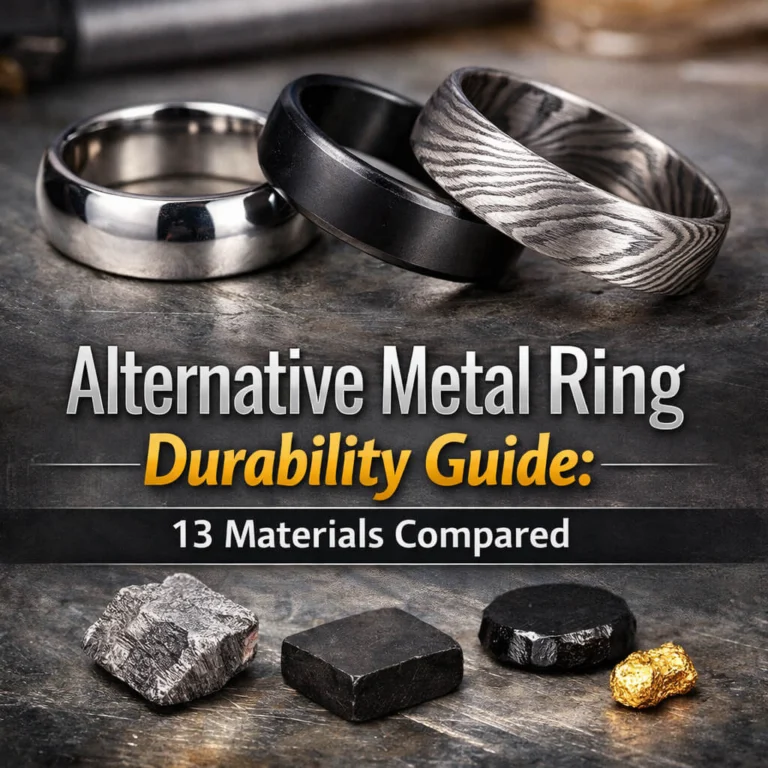
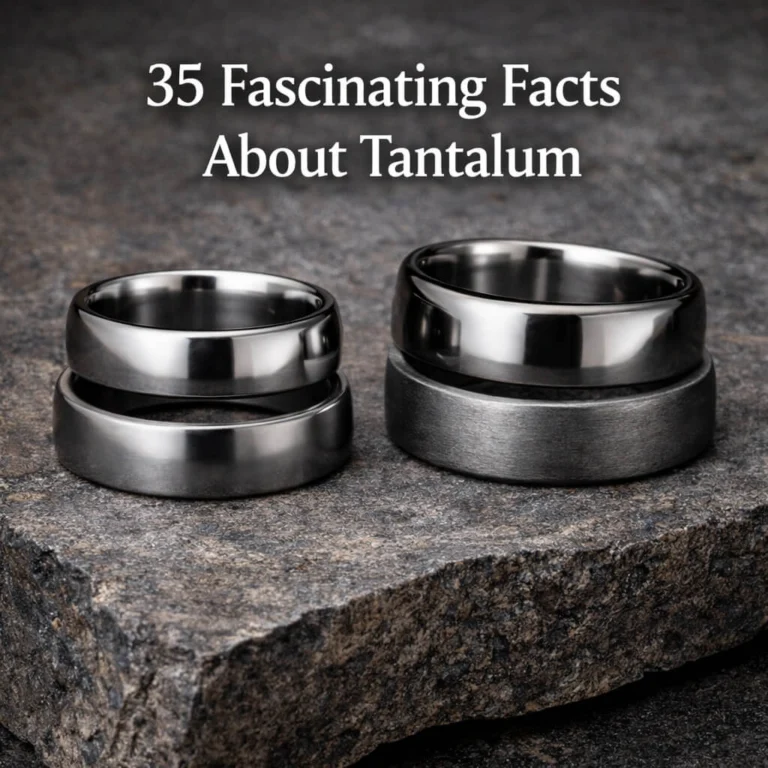
Tungsten carbide is extremely hard but brittle. Titanium is tough and very light. Tantalum is dense and heavy. Zirconia ceramic behaves differently again. Zirconium metal, often confused with zirconia ceramic, is itself a metallic material that forms a dark oxide surface when heat treated.
These differences affect comfort, wear, and long-term appearance. Labels matter far less than material behaviour.
Are alternative metals unsuitable for wedding rings?
They have been used successfully as wedding rings for many years.
The idea that they are unsuitable usually comes from tradition rather than performance. Suitability depends on expectations, lifestyle, and preference, not historical norms.
Final thoughts
Most misconceptions about alternative metal rings come from unfamiliarity and oversimplified claims.
No ring material is perfect, and no single choice suits everyone. Understanding how different materials behave allows decisions to be based on facts rather than fear, tradition, or marketing language.
That matters more than the metal itself.





 Winner of King award for Alternative Metal Rings
 Winner of Theo Paphitis (Dragons Den) Small Business Award
 We are fully pci-dss compliant
 Security Headers rate us A+ for website security
 We are registered with the ico for data protection
 We are members of The Guild of Jewellery Designers